
Can You Paint Pressure Treated Timber? A Step-by-Step Guide
Quick answer
- Yes, you can paint pressure-treated timber, but only once the preservative has dried out of the wood.
- Test it first: sprinkle a few drops of water on the surface. If they soak in, it is ready to prime. If they bead on top, wait longer.
- Use exterior-grade products: a primer suitable for treated timber, then two or three thin coats of exterior wood paint.
- Painting too early is the main cause of peeling, blistering and patchy colour.
- Our furniture is made from pressure-treated Swedish Redwood, and pieces such as our workbenches, potting tables and BBQ tables arrive unfinished so you can paint, stain or oil them.
Looking to paint your pressure-treated timber? At MG Timber, we make garden furniture from pressure-treated Swedish Redwood, including outdoor dining sets, wheelie bin stores and BBQ tables, and many of our customers paint theirs to match their garden.
Yes, you can paint pressure-treated timber, but there is a catch.
For a finish that lasts, the wood must be completely dry, which can take up to six months depending on the weather and the size of your project.
In this guide, we explain why patience pays off, how to check the timber is ready, which paints work best and how to prepare and paint it properly so your project looks great and stands the test of time.
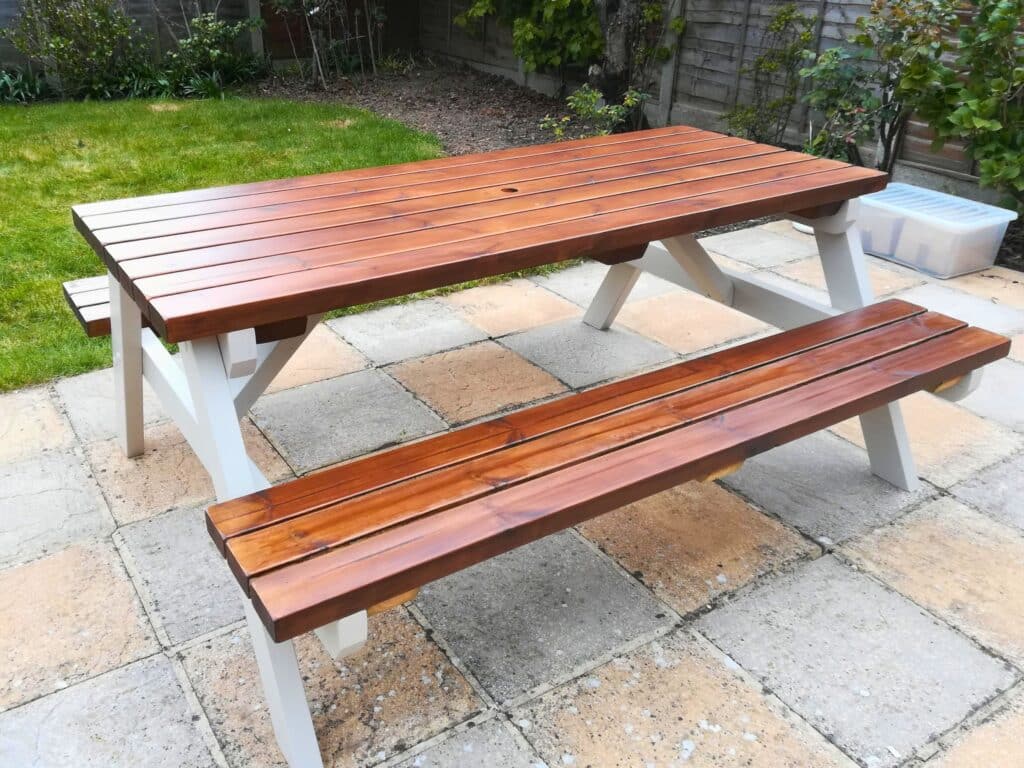
What Is Pressure-Treated Timber?
Pressure-treated timber is wood that has been infused with chemical preservatives under high pressure to make it resistant to rot, decay, fungi and insect damage.
The timber goes into a sealed cylinder, the air is drawn out, and preservative is forced deep into the wood fibres. Because the preservative is carried in liquid, freshly treated timber holds a lot of moisture, and that moisture has to dry out before paint will stick.
Freshly treated timber often has a greenish or brown tint. In the UK, treated timber is often called tanalised timber, after the Tanalith preservative. Many of our products, including our Griffiths log store, are made from Tanalith pressure-treated Swedish Redwood.
Many people paint or stain treated timber to get a more uniform, finished look while still benefiting from its durability.
How To Tell If Your Treated Timber Is Dry Enough To Paint
Drying time depends on the weather, how much air can get around the wood and the thickness of the timber, so check the wood rather than relying on a date.
- The water drop test: sprinkle a few drops of water onto the surface. If the water soaks in within a few minutes, the timber is ready to prime. If it beads up and sits on top, the wood is still too wet.
- Look and feel: wet treated timber feels cool and damp to the touch and looks darker. Dry timber is lighter in colour and feels dry right across the board.
- Use a moisture meter: for larger projects, an inexpensive moisture meter takes the guesswork out. Check the paint manufacturer’s guidance for the reading they recommend.
- Test more than one spot: undersides, joints and shaded areas dry more slowly than the top surfaces.
What Happens if You Paint Pressure-Treated Timber Too Soon?
Not leaving enough drying time causes several problems:
- Peeling or flaking paint: trapped moisture stops the paint from bonding to the wood, so the finish soon starts to peel.
- Blistering: as the timber dries, trapped water can push the paint up into bubbles, leaving an uneven surface.
- Uneven colour: moisture affects how the primer and paint absorb, giving patchy or blotchy coverage.
- Shortened lifespan: even if the paint looks fine at first, the finish won’t last, so you’ll need to repaint sooner.
Waiting until the timber is fully dry gives a smooth, long-lasting finish that protects your wooden workbench, picnic table or planter and keeps it looking great.
Paint, Stain or Oil: Which Finish Suits Treated Timber?
Paint is not the only option. This table compares the three most common finishes for pressure-treated timber.
| Finish | Look | Best for | Things to know |
|---|---|---|---|
| Exterior wood paint | Solid colour, hides the grain | Bin stores, planters, BBQ and potting tables, furniture you want to match a colour scheme | Needs fully dry timber and a primer. Chips and peeling need touching up. |
| Wood stain | Tints the wood, grain still shows | Picnic tables, benches and log stores where you want a natural timber look | Soaks in rather than forming a film, so it is less likely to peel. Fades over time and needs recoating. |
| Garden furniture oil | Natural, slightly richer colour | Tables, benches and dining sets that get handled a lot | Easy to reapply with no sanding back. Usually needs a fresh coat each year. |
| Leave it natural | Green or honey tones that weather to silver-grey | Anyone happy with a weathered look | The pressure treatment still protects the timber against rot and insects. |
What Is the Best Paint for Pressure-Treated Timber?
Always choose a paint made for exterior wood, and check the tin says it is suitable for treated or tanalised timber.
| Paint type | Pros | Cons |
|---|---|---|
| Water-based exterior acrylic | Flexible, so it moves with the timber. Usually microporous, letting moisture escape. Quick drying and low odour. | Can’t be applied in cold or damp weather. |
| Oil-based exterior paint | Hard-wearing surface with a smooth finish. | Slower drying and less flexible, so it can crack as the timber moves. |
| Garden or shed paint | Made for rough or planed outdoor timber, often in garden-friendly colours. Many need no separate primer. | Thinner film than a full paint system, so it may need recoating more often. |
How To Paint Pressure-Treated Timber: A Step-by-Step Guide
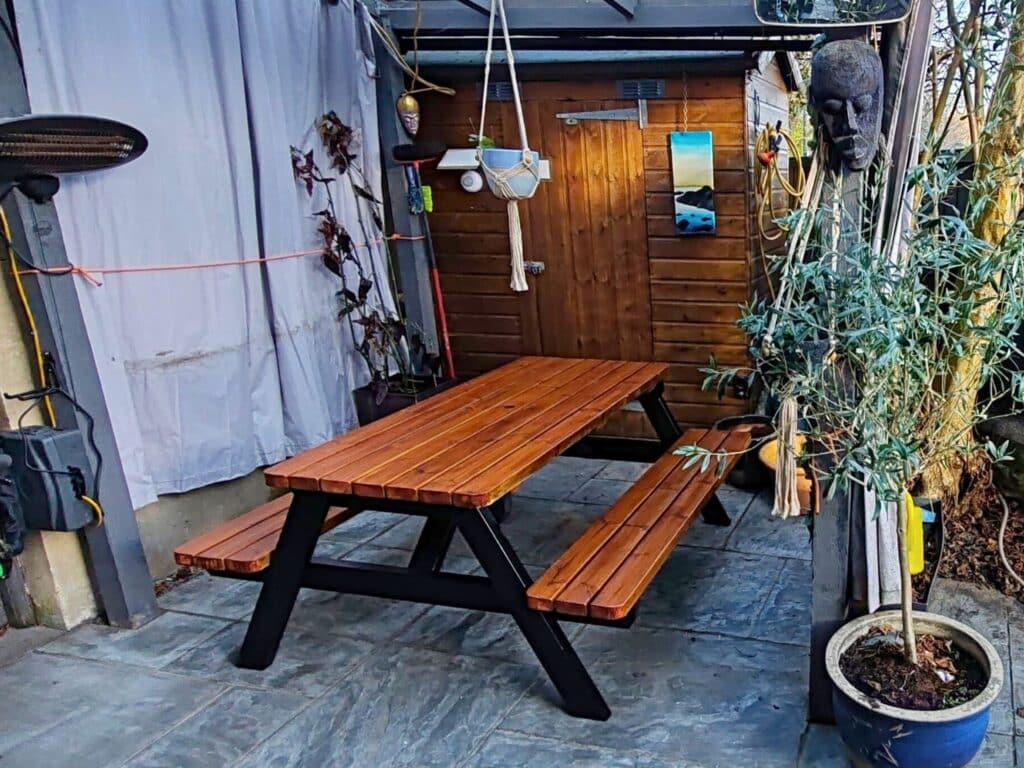
Painting pressure-treated timber needs careful preparation and the right products. Follow these five steps:
Check the timber is dry
Do the water drop test on several areas, including undersides and joints. If the water beads on the surface, wait and test again in a few weeks.
Prep the wood
Clean the timber with a soft brush and soapy water to remove dirt, dust and debris, then let it dry.
Lightly sand the surface to remove rough spots that might stop the paint sticking.
Safety tip: wear a dust mask when sanding treated timber, and sweep up the dust rather than burning it.
Apply the primer
Use a brush, roller or sprayer to apply a primer suitable for pressure-treated timber, unless your paint says it needs no primer.
Allow the primer to dry fully, following the manufacturer’s instructions, before painting.
Paint the timber
Choose an exterior-grade paint that can stand up to UV, rain and changes in temperature.
Apply two or three thin coats, leaving the recommended drying time between each one. Thin coats dry more evenly and are less likely to peel than one thick coat.
Pro tip: paint edges, ends and undersides first, then finish the visible surfaces for an even result.
Check whether a topcoat is needed
Most exterior wood paints are designed to be the final coat. Only add a clear topcoat if the paint manufacturer recommends one for your product.
The result: a smooth, durable finish that protects your timber and keeps your outdoor projects looking great for years.
Painting Your MG Timber Furniture
Our furniture is handmade in the UK from pressure-treated Swedish Redwood. Several pieces, including our indoor and outdoor workbench, potting table and BBQ and pizza oven table, arrive unfinished, so you can leave them natural or paint, stain or oil them to suit your garden. Our wheelie bin store can also be painted or stained to match your home.
Here are a couple of examples painted by our customers:
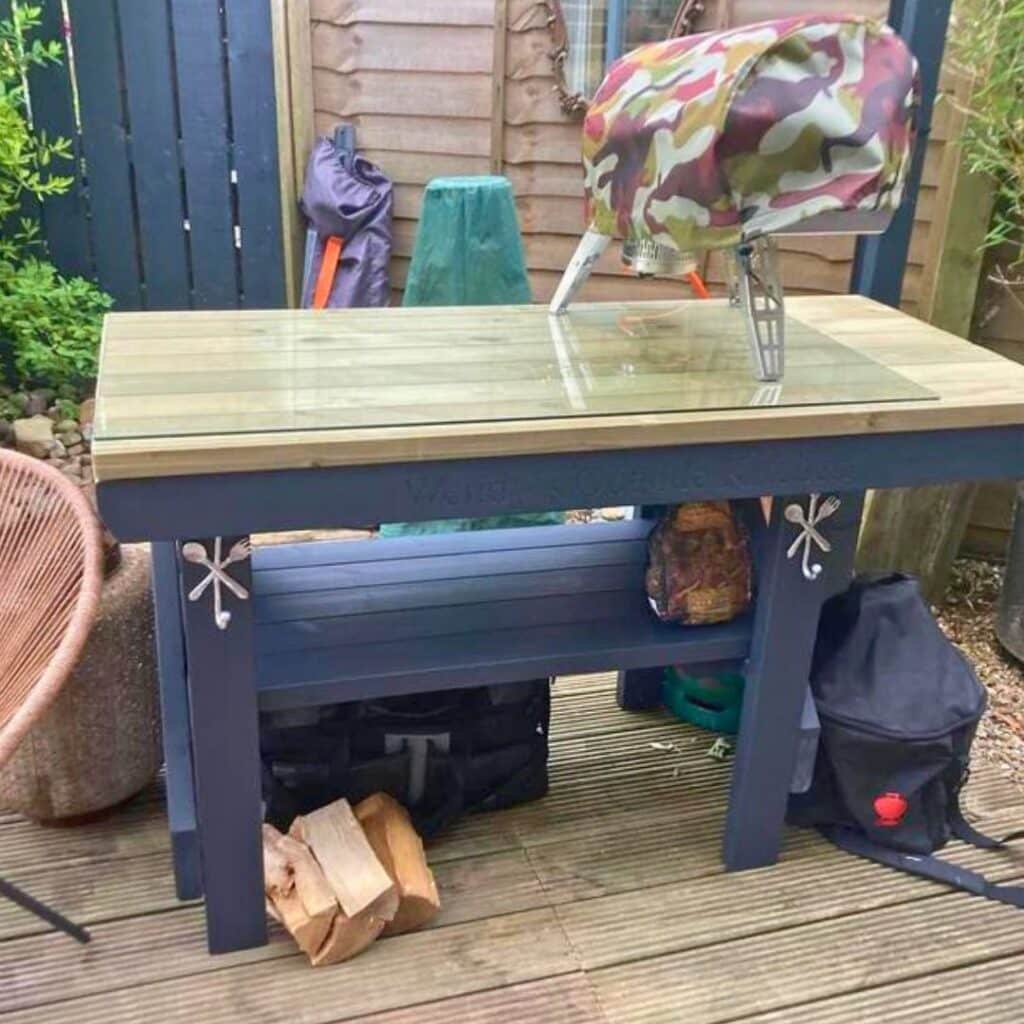
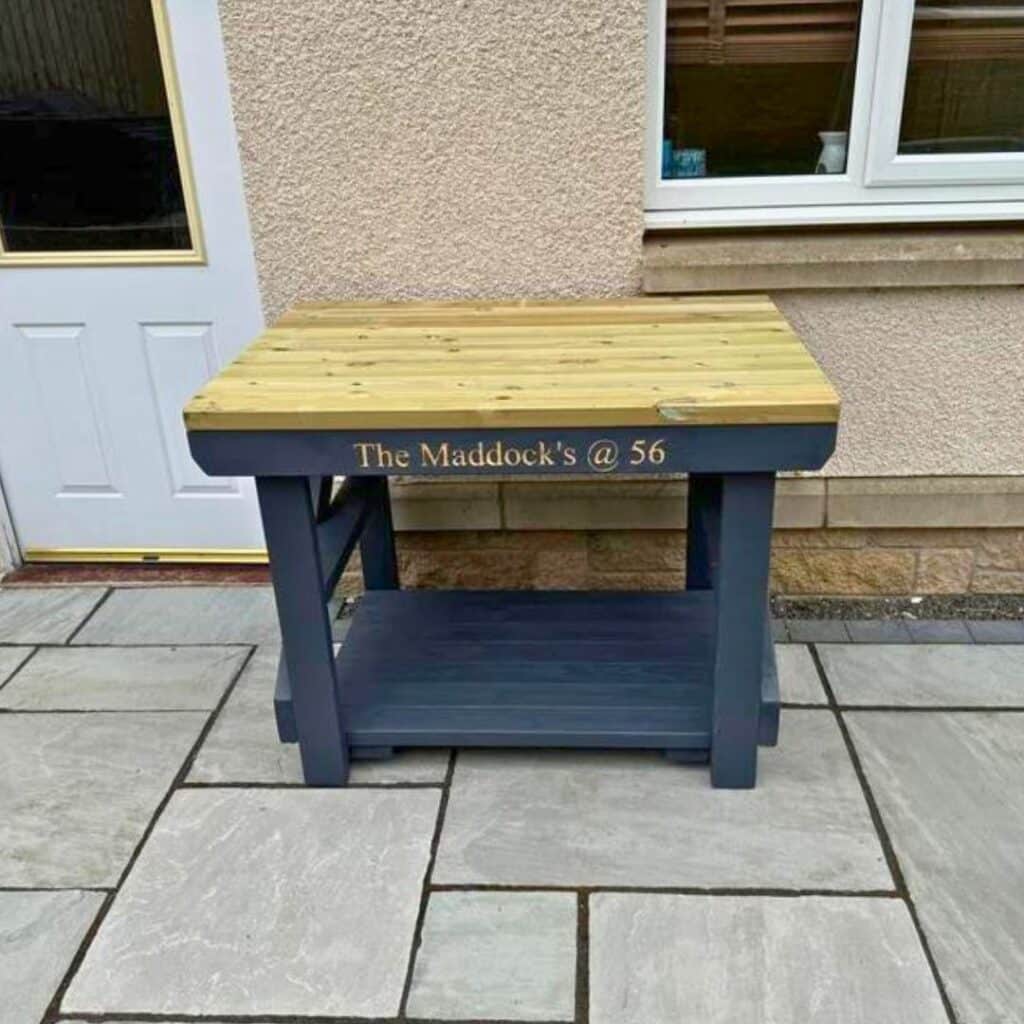
Painting a BBQ table? Always use a non-combustible base between your barbecue or pizza oven and the timber, whatever finish you choose.
How To Get Long-Lasting Results
To keep your painted pressure-treated timber looking great for years, follow these tips:
- Paint on a dry, mild day: avoid painting before rain, frost or in strong heat, as these stop the paint bonding and curing properly.
- Allow proper drying between coats: follow the manufacturer’s drying times between primer and paint. Rushing coats can cause peeling.
- Seal edges and end grain: board ends and cut edges absorb moisture faster and are the first places to peel. Give them extra primer and paint.
- Keep water off: lift furniture off wet ground and don’t let water pool on flat surfaces.
- Maintain the finish: clean surfaces regularly and touch up chips and scratches before water gets under the paint.
Read our guide on protecting wooden garden furniture for more maintenance advice.
Frequently Asked Questions
Can you paint pressure-treated timber straight away?
No. Freshly treated timber is still wet with preservative, so paint applied straight away is likely to peel or blister. Wait until the water drop test shows the timber soaks up water, which can take up to six months.
Can you paint tanalised timber?
Yes. Tanalised timber is pressure-treated timber, so the same rules apply: let it dry fully, clean and lightly sand it, prime it and use an exterior-grade paint.
Does pressure-treated timber need to be painted?
No. The pressure treatment protects the timber against rot and insects without paint. Painting, staining or oiling is mainly about appearance, although a good finish also helps reduce surface weathering and cracking.
Can you stain pressure-treated timber instead of painting it?
Yes. Stain soaks into the wood rather than sitting on top, so it is less likely to peel, and it keeps the grain visible. The timber still needs to be dry before you apply it.
Why is pressure-treated timber green?
Many preservatives, including Tanalith, are copper-based, which gives freshly treated timber a green tint. The colour softens over time and weathers to a silver-grey if the timber is left unfinished.
Can you paint over wood preserver?
It depends on the product. Some wood preservers are designed to be painted over once dry, while others contain oils or waxes that stop paint sticking. Check the preserver’s tin, and if in doubt, test a small hidden area first.
What is the best paint for treated timber?
A water-based exterior acrylic or microporous wood paint is a good choice for most garden projects, because it flexes with the timber and lets moisture escape. Check the tin says it is suitable for treated timber.
Related Guides and Products
Timber care guides
Ready to paint or stain
Shop by category
Have a question about finishing your furniture? Get in touch with our team.