
Wood Treatment Guide: How to Treat Softwood, Oak and Pressure-Treated Timber
Quick answer
The right wood treatment depends on the type of wood and where it lives:
- Untreated softwood (pine, Swedish Redwood): a wood preservative first, then a stain, paint or oil for colour and water resistance.
- Pressure-treated timber: already protected against rot from the inside. It only needs a water-repellent finish if you want one, plus end grain preserver on any cut ends.
- Oak and other hardwoods: a penetrating oil to keep the colour, or leave it untreated to weather to a silver-grey.
“Wood treatment” covers a lot of products: preservatives, oils, stains, varnishes and paints all claim to protect timber. They do very different jobs, and the wrong one on the wrong wood can waste money or even cause damage. This guide matches the treatment to the timber, so you only buy what your wood actually needs.
Step 1: Know what you are treating
Before choosing a product, answer two questions: what wood is it, and has it already been treated?
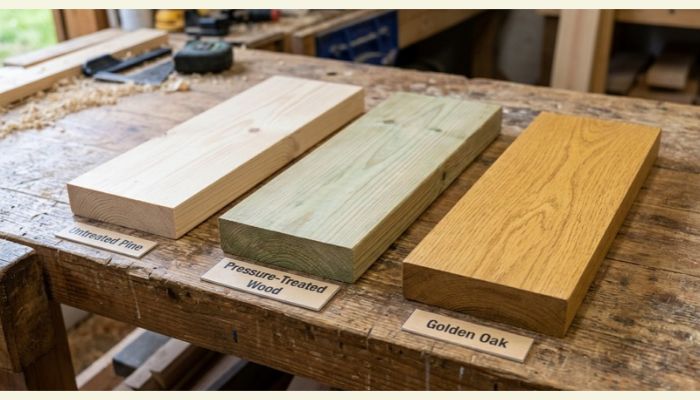
Softwood
Pine, spruce, larch and Swedish Redwood. Affordable and easy to work, but it will rot outdoors without protection.
Pressure-treated
Softwood with preservative forced deep into the fibres in a vacuum tank. It often has a green or brown tint and the rot protection is already built in.
Hardwood
Oak, teak, iroko and similar. These are naturally dense and durable, so treatment is mostly about appearance.
Step 2: Match the treatment to the wood
| Wood type | Needs preservative? | Best finish | Avoid |
|---|---|---|---|
| Untreated softwood | Yes, for outdoor use | Preservative, then exterior stain, paint or oil | Oil alone outdoors, as it will not stop rot |
| Pressure-treated softwood | No, except on cut ends | Water-based stain, exterior paint or oil once dry | Finishing it while still damp from treatment |
| Oak | No | Penetrating oil, or leave to weather naturally | Thick varnish outdoors, as it cracks and peels |
| Teak and oily hardwoods | No | Teak oil or a hardwood protector | Paint, which struggles to bond to oily timber |
Step 3: Understand what each treatment actually does
| Treatment | What it does | Look | Typical reapplication |
|---|---|---|---|
| Wood preservative | Protects against rot, fungi and insects | Clear or lightly tinted | Once before finishing; check the product label |
| Oil | Soaks in, repels water, feeds the grain | Natural, slightly richer colour | Usually once or twice a year |
| Stain | Adds colour and some water and UV resistance | Grain shows through | Usually every 2 to 3 years |
| Exterior paint | Forms a coloured, weatherproof film | Solid colour, grain hidden | Touch up as needed; recoat every few years |
| Varnish | Hard, glossy surface film | Shiny | Best kept indoors; outdoors it can crack and peel |
Reapplication times vary with the product, exposure and weather. Always follow the manufacturer’s instructions on the tin.
How to treat softwood and Swedish Redwood for outdoor use
Swedish Redwood is a slow-grown pine with a tight grain, which makes it stronger and more stable than many faster-grown softwoods. It is still a softwood, though, so it needs protection from rot outdoors.
- Check whether it is already pressure-treated. If it is, skip the preservative.
- Clean and sand the surface so the treatment can soak in evenly.
- Apply a wood preservative if the timber is untreated, paying attention to end grain and joints.
- Let it dry fully, as directed on the tin.
- Finish with a stain, paint or oil for colour and water resistance.
How to treat pressure-treated timber
Pressure treatment, such as Tanalith, drives preservative deep into the timber, so the rot protection does not wear off the surface the way a brushed-on preservative can. That means:
- You do not need another preservative coat on the main surfaces.
- Treat any cut or drilled ends with an end grain preserver, as cutting exposes untreated wood.
- Wait until it is dry before oiling, staining or painting. Sprinkle a few drops of water on it: if they soak in, it is ready; if they bead, give it longer.
Want to add colour? Read our step-by-step guide to painting pressure-treated timber.
How to treat exterior oak
Oak is naturally durable, so it does not need a preservative. Your choice is about looks:
- Keep the honey colour: apply a penetrating oil or hardwood protector and top it up regularly.
- Let it silver: leave it untreated and it will weather to a soft grey over time.
- Watch your fixings: oak contains tannins that can react with ordinary steel and leave black stains, so use stainless steel screws and fittings.
Our furniture: already pressure-treated, ready to finish
Every piece of MG Timber garden furniture is handmade in the UK from pressure-treated Swedish Redwood. The rot protection is already inside the timber, so you can use it straight away. When it has fully dried, you can oil, stain or paint it to match your garden.
Browse our picnic benches | Outdoor dining sets | Workbenches
Common wood treatment mistakes
| Mistake | What to do instead |
|---|---|
| Using oil as the only protection on untreated softwood outdoors | Use a preservative first, then oil |
| Painting pressure-treated wood while it is still damp | Do the water drop test first |
| Forgetting cut ends | Seal every cut with end grain preserver |
| Varnishing outdoor furniture | Choose an oil or exterior stain that flexes with the wood |
| Treating in cold or wet weather | Pick a dry, mild day and follow the tin’s temperature guidance |
Frequently asked questions
What is the best wood treatment for outdoor use?
For untreated softwood, a wood preservative followed by an exterior stain or paint. For pressure-treated timber, a water-repellent oil or stain once it is dry. For hardwoods such as oak or teak, a penetrating oil.
Does pressure-treated wood need treating?
Not for rot protection, as that is already built in. Treat any cut ends with end grain preserver, and add an oil, stain or paint if you want extra water resistance or colour.
How do you treat timber for furniture?
Clean and sand it, apply a preservative if the wood is untreated softwood, let it dry, then finish with an oil, stain or paint suited to where the furniture will live.
How do you treat redwood for outdoor use?
If it is untreated, apply a wood preservative, let it dry, then finish with an exterior stain, paint or oil. If it is pressure-treated, as ours is, you can skip the preservative and finish it once dry.
How often should I treat outdoor wood?
As a rough guide, oils every 6 to 12 months and stains every 2 to 3 years, but it depends on the product and how exposed the wood is. If water stops beading on the surface, it is time for another coat.
Is there a natural wood preservative?
Natural oils such as linseed or tung oil repel water, but they do not protect softwood against rot the way a preservative or pressure treatment does. They work best on durable hardwoods or on timber that is already treated.