
Raised garden beds are one of the simplest changes you can make to a garden, and one of the most useful. You control the soil, the drainage and the height you work at, and the whole plot looks tidier for it. Below are the eight main benefits of raised garden beds, what to watch out for, and how to choose the right size.
We make our raised bed planters by hand in the UK from pressure-treated Swedish Redwood, so this guide draws on what we build and what our customers tell us.
Why use raised garden beds? The short version
- You choose the soil, so heavy clay or sand stops being a problem
- Better drainage and no compaction from feet
- Fewer weeds, and they are easier to pull
- Less bending for your back and knees
- Earlier planting, as raised soil warms faster in spring
- Neat, organised beds that suit small gardens and patios
In this guide
1. Improved Soil Quality
The biggest advantage of a raised bed is control over the soil. Heavy clay, sandy soil and badly drained ground are common in UK gardens. With a raised bed you skip all of that and fill it with exactly the mix you want.
A simple starting mix
Combine good-quality topsoil with plenty of compost or well-rotted organic matter. Hungry crops such as courgettes and squash like more compost; herbs such as thyme and rosemary prefer a leaner, grittier mix.
2. Better Drainage and Less Soil Compaction
Because the soil sits above ground level, excess water drains away faster, which helps prevent waterlogging and root rot. You also never walk on the bed, so the soil stays loose and airy and roots can grow deep without fighting through packed earth.
Tip: keep the bed narrow enough to reach the middle from either side. That way you never need to step in it, and the soil stays uncompacted year after year.
3. Easier Weed and Pest Control
Starting with fresh soil means far fewer weed seeds, and the weeds that do appear are easy to spot and pull without disturbing your plants. Slugs and snails still find their way in, but the raised sides make it much easier to fit barriers, copper tape, netting or hoops for fleece.
4. Easier Access and Less Strain
Gardening is a labour of love, but it can be hard on your back and knees. A raised bed brings the soil closer to you, so planting, weeding and harvesting need less bending and kneeling. The taller the bed, the bigger the difference, which is why height is worth thinking about if you have stiff joints or limited mobility.
| Our heights | Good for |
|---|---|
| 3 tier (29cm) | Salad leaves, herbs and shallow-rooted flowers |
| 4 tier (38cm) | Most vegetables, including beans and brassicas |
| 5 tier (47cm) | Root crops such as carrots and parsnips, with less bending |
| 6 tier (57cm) | The least bending, and deep soil for shrubs and larger plants |
5. A Longer Growing Season
Raised soil warms up more quickly in spring and drains faster after rain, so you can often sow and plant a little earlier than in the open ground. In a UK climate, a few extra weeks at the start of the season can make a real difference to what you harvest.
6. Space Efficiency and a Tidier Garden
Raised beds let you grow more in less space. Because the soil is loose and rich, you can plant closer together than in a traditional row. They also work on patios and in small gardens, and the clean timber edges give the whole garden a more organised look.
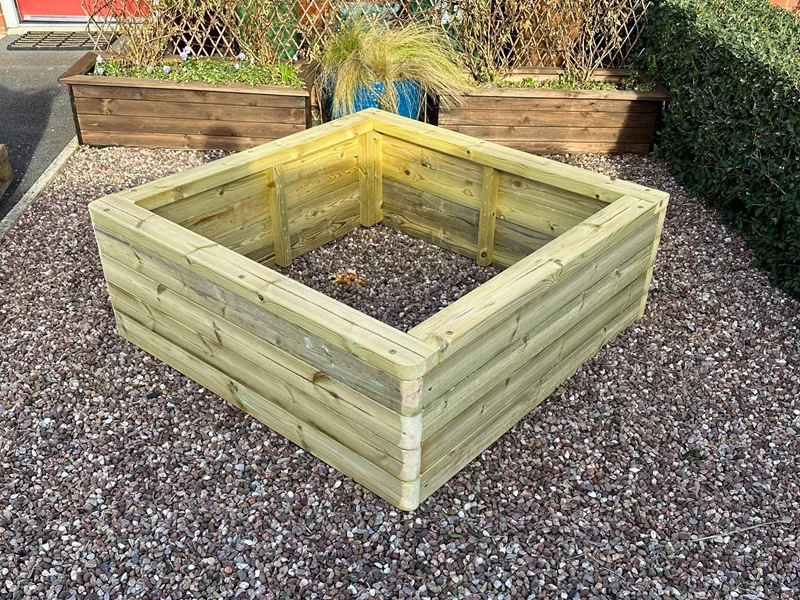
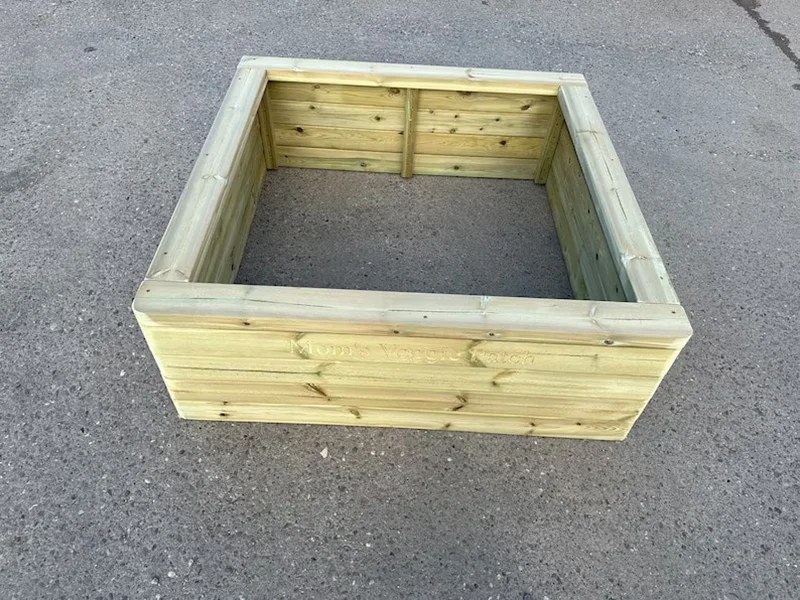
7. Versatility and Custom Sizes
Vegetables, herbs, cut flowers or a mix of everything: raised beds suit them all. You can also choose a shape and size that fits your space, rather than working around an awkward border.
| Rectangular planter | Cube planter | |
|---|---|---|
| Width | 600, 900, 1200, 1500 or 1800mm | 600 x 600, 900 x 900 or 1200 x 1200mm |
| Depth | 300, 450 or 600mm | |
| Height | 3 to 6 tiers (29cm to 57cm) | |
| Timber | Pressure-treated Swedish Redwood, planed smooth with rounded edges | |
Need a size that is not listed? Custom sizes are available on request; just get in touch.
8. Using Water and Compost More Efficiently
A raised bed concentrates your effort on a defined area. Water, compost and mulch go where the plants are, not on paths or bare ground, so less is wasted. Healthy, well-drained soil also tends to mean stronger plants that need less help from shop-bought feeds.
Choosing the Right Raised Bed
Pick a durable timber
A raised bed is in constant contact with damp soil. Pressure-treated timber lasts far longer than untreated softwood. Ours is chunky 94 x 44mm Swedish Redwood.
Keep it reachable
If you can reach it from both sides, a 600mm depth works well. Against a wall or fence, go no deeper than you can comfortably reach from the front.
Decide on a base
Our planters are open at the bottom, which is ideal on soil because roots can grow down and water drains away. On a patio, add a base or a liner. Bases are available; contact us for prices by size.
Plan for assembly
Our raised beds arrive ready to assemble with full instructions and a video guide. The larger sizes are heavy, so a second pair of hands helps.
What Our Customers Say
Our raised garden bed planter is rated 4.8 out of 5 from 26 verified reviews on REVIEWS.io.
★★★★★
“Beautifully made and very solid. Easy to put together.”
Belinda, verified buyer
★★★★★
“A very well made and substantial raised border. Very happy with my purchase.”
Clare, verified buyer
★★★★★
“Excellent quality planter. I opted for the largest size and it is a really solid, heavy duty planter.”
Sandra, verified buyer
★★★★★
“Great product, I painted mine to match garden furniture.”
Rasika, verified buyer
Raised Garden Bed FAQs
What are the advantages of raised garden beds?
Better soil, better drainage, fewer weeds, less bending, earlier planting in spring and a tidier garden. They also make it easier to protect crops with netting or fleece.
Are there any disadvantages to raised beds?
They cost more to set up than digging a border, as you need the bed and the soil to fill it. They can also dry out faster in hot weather, so check moisture more often in summer.
Should a raised bed have a bottom?
On soil or grass, no: an open bottom lets roots go deeper and water drain freely. On paving or decking, use a base or liner to hold the soil in.
How deep should a raised bed be?
Around 30cm suits most salads and herbs. Root crops and larger plants do better with 40cm or more.
Explore Our Raised Garden Bed Planters
Raised garden beds make gardening more productive, more manageable and easier on your body. Ours are handmade in the UK from pressure-treated Swedish Redwood, in a range of sizes and heights.